
Blog / Bowie Honda Service

Driving in MD: What to Do if You Get a Flat Tire

Flat Tire | Bowie, MD

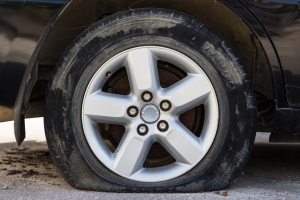
A flat tire will always happen at the worst possible time. Without warning, your tire will blow out, which will mean that you’ll have to look for a safe space to pull over. We hope this won't happen when driving in Bowie, MD, but we'd like to tell you how you can easily fix this problem.

Easy Steps to Follow If You Get a Flat Tire

Find a Safe Place

The most important first step is ensuring you and your car are in a safe place. When you change a tire, all your focus is on the task. Make sure that your car is as far from moving vehicles as possible.

Gather Your Tools

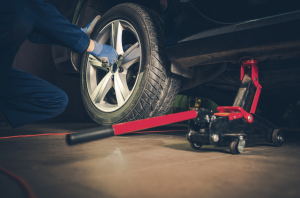
Changing a tire requires your tire iron or lug wrench, jack, and spare tire. In addition, if you have cones or road flares, you can place them a safe distance behind your car to warn other drivers. It's advisable to check the condition of your spare regularly to ensure it's in good condition if needed.

 Ensure your transmission is in park mode and your emergency brake is engaged. This helps prevent your car from moving while you work.

Loosen the Lugs

The lugs hold your tire in place, and they're very tight. It requires brute force to loosen them, and they turn counterclockwise. If the lugs are loose now, removing the tire when the wheel is off the ground is easier.

Place the Jack

Your Honda has several jacking points on its underside. These points allow you to lift your car without damaging anything. The exact points for your model are listed in your car manual. Place the jack under a jacking point and slowly lift your car until the flat is completely off the ground.

Replace the Tire

Remove all the lugs from the flat and place them safely to one side so they don't roll away. Once the lugs are removed, remove the flat, and position the spare over the wheel studs. Positioning can be difficult as you must balance the spare and rotate it to match the studs. An easy way to do this is to put your foot under the spare to give you extra balance.

Carefully insert the lug nuts into each wheel stud. Once all the lugs are in place, tighten them by hand, then use the tire iron to ensure the lugs are snugly in place.

Lower Your Car

Carefully lower the jack until your tires are back on the ground. Use the tire iron again to tighten all the lugs until they're securely in place. Finally, pack your tire iron, jack, and flat into the trunk and drive away.

 Now you know the easy steps to change a flat safely. Visit our service department at DARCARS Honda, and we can fit a new tire or replace your spare.
Posted in:

Related Posts

Tire Rotation | Bowie, MD

Why Preventative Maintenance Is Crucial for Your Honda

Preventative maintenance is essential for your car's health. Regular maintenance allows any potential issues to be identified so we can repair them and prevent future problems. As your Honda dealer in Bowie, MD, we'd like to share some of our top maintenance tips with you. Tips for Maintaining Your Honda and Preventing Issues Tire Check and Rotation Your tires are subject to wear, varying from minor to major, depending on your driving conditions and weather factors. Modern tires are scientifically engineered to high standards but can still be damaged. Sharp objects in the road can cause a slow leak in a tire, and even sunlight gradually causes tires to become less elastic. Losing elasticity in a tire makes it more prone to cracks that can lead to leaks or a blowout. If your tires are examined regularly, most problems are easy to identify and repair. We also recommend regular tire rotations to increase tire lifespan. Tires that remain in the same position develop distinctive wear patterns which weaken the tires. When we rotate your tires, we move them to different positions on your car. This spreads wearing more evenly among the tires and increases the time between replacements. more Regular Battery Checks A healthy battery is vital for your car as it supplies the power that starts your engine. The battery stores electricity using a complex series of chemical reactions. These chemical reactions gradually cause the battery to wear out as the chemicals break down. When this happens, your battery will slowly lose its ability to recharge and retain an electrical charge. A battery check involves connecting your battery to our battery tester. The battery tester subjects your battery to a series of tests to determine its strengths and identify any possible weaknesses. We advise a battery test when your battery is three years old and then testing it again each year after that. Identifying a battery problem allows it to be replaced before it fails, which saves you time, money, and stress. Oil Checks Your engine depends on the right level of high-quality oil to enable it to work efficiently. Oil is continuously pumped through your engine, and it cools hot engine components as it moves. Oil lubricates all the parts of your engine and provides them with a friction-resistant coating to reduce wear and damage. Additives in the oil help to prevent engine blockages and help to prevent rust. The engine slowly consumes oil. It also slows down over time as it absorbs dirt and other minute debris in the engine. Older oil loses all its benefits, leading to damaged engine components and additional wear. Regularly checking the oil and replacing it when necessary improve your engine's health and lifespan, Keep your car in great shape with regular maintenance. Call our service department today at DARCARS Honda.

Iignition coil | Bowie, MD

The Top 5 Signs of a Faulty Ignition Coil

Ask any Honda dealer, and they'll tell you the repercussions of a faulty ignition coil can be far-reaching, especially if the issue isn't rectified quickly. Engine failure is the worst-case scenario, so knowing the signs of a failing ignition coil is essential. Honda Dealer Reveals the Top 5 Signs of a Faulty Ignition Coil 1.    Check Engine Light Is On If your check engine light is on, it could mean the ECU has detected a misfire or faulty coil in one of the cylinders. But you could also look at a defective spark plug or a broken sensor. Either way, taking your car in for a diagnostic scan when the check engine light comes on is best. A professional-grade scanner can figure out the actual cause of your check engine light. This can help eliminate costly guesswork and can help you avoid unnecessary repairs. more 2.    Stalling or Hesitating Engine If your engine stalls out, it can indicate a bad ignition coil or spark plug malfunction. It's common in older cars with high mileage, but even newer vehicles are susceptible to this problem. This is especially true when dealing with a coil pack system. Neglecting this problem can lead to further damage, so make sure you get your car checked out as soon as possible. 3.    Rough Idling It's normal for your car to idle rough when it’s cold outside. But a bad ignition coil can also result in erratic revving, even on a warm day. If you suspect a bad ignition coil, have your dealership inspect the engine and individual coils. You could look at clogged fuel injectors or a dirty air filter, and the dealer can help solve those issues before installing the new coils. 4.    Reduced Power and Acceleration If your car is losing power, it could be due to a failing ignition coil. This can cause slow acceleration, often accompanied by sputtering or backfiring. You risk serious mechanical issues if this problem isn't addressed in time. We are talking about misfiring that could lead to significant engine damage or even an accident. 5.    Decreased Fuel Economy When your car's fuel economy decreases, it could be a sign that one of the ignition coils is failing. Each misfire uses more fuel than necessary, and the combustion efficiency drops. This issue can lead to poor performance and higher emissions. The best action is to replace the faulty coils with high-quality OEM components. Ignition coils are a critical component of your car's engine, and any sign of malfunction should be taken seriously. If you notice any signs we've discussed in this post, visit DARCARS Honda today and have your car checked out by one of our experienced technicians. We'll help you get back on the road in no time!

Pouring Oil into Car Engine | Bowie, MD

How Often Should You Get a Honda Oil Change?

At one time, the standard oil change frequency for all vehicles was every 3,000 miles or every three months, whichever came first. However, due to engineering advances, that's no longer the case for every car. Honda owners wonder how often they should get a Honda oil change. The answer is that it depends on what year your vehicle was manufactured. Manufacturer Recommendations If your Honda was manufactured before 2008, you should follow the standard guideline of getting your oil changed every 3,000 miles or every three months, whichever comes first. Vehicles that were manufactured between 2008 and about 2015 can usually drive for about 5,000 miles or six months before getting their oil changed. more Newer cars manufactured after 2015 can often wait for an oil change until there are 7,500 and 10,000 miles on the odometer. Factors That Require More Frequent Changes While it is true that advances in engineering and oil technology have reduced the need for frequent oil changes, some factors can cause the oil in your car to break down faster than it normally would. If your driving habits include one or more of the following conditions, you'll want your oil changed more frequently than recommended. You drive aggressively (accelerating and braking quickly) You find yourself in stop-and-go traffic frequently You live in a cold-weather state You frequently drive short distances How to Tell That It's Time for an Oil Change The Color of the Oil When motor oil is clean, it's a translucent amber color. You can see through it to the metal on your dipstick when you check your oil level. If it needs to be changed because it's dirty, it will be an opaque dark brown or black color. You will not be able to see the dipstick through it during oil level checks. You can also bring your car to a service center to check the color. Your Car Reminds You Most newer vehicles come equipped with maintenance reminders telling you when it's time to change your oil. In your Honda, you'll see a light illuminate on your dashboard when 15% of life is left in your oil. You'll want to schedule your oil change at this time or shortly after that. However, remember that this light is only a guide. Your driving habits are still essential to keep in mind when planning your maintenance frequency. There's a Knocking Sound In Your Engine The main function of motor oil is to keep the parts in your engine lubricated and moving against each other smoothly. If your oil is dirty, or you don't have enough oil in your car, you'll likely hear a knocking or rattling sound from the engine. This sound is coming from the parts hitting each other without the benefit of lubrication. Have your car inspected at the same time as your oil change to ensure no damage was done. The frequency of your oil changes depends heavily on your driving habits. However, at a minimum, follow the manufacturer's recommendations as indicated in your owner's manual. Contact DARCARS Honda to schedule your oil change and maintenance appointment today.